The soil is a living environment in which many organisms (earthworms, fungi, bacteria, nematodes, etc.) cohabit, many of which will benefit the soil and the crops. Some, conversely, such as phytophagous nematodes, have a negative impact on crop production.
CROP HEALTH PLANTS ARE PLANT-BASED SOLUTIONS TO COMBAT NEMATODES.
How do crop health plants work?
Some species, such as fodder radish and white mustard, are specially selected for their specific resistance to nematodes and their effects in actively reducing the populations of these pathogens by limiting their reproduction.
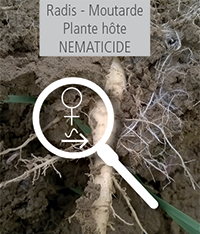
ACTIVE REDUCTION
The nematicide plant seals off the cells near the egg. The female and her offspring are trapped in the plant. Without food, the trapped nematodes will be destroyed. Example: The forage radish variety ANACONDA allows active reduction of nematodes affecting potatoes, beets, maize and carrots:
MeloIdogyne chitwoodi
Meloidogyne fallax
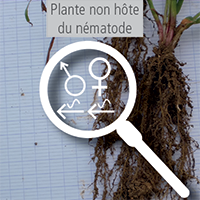
Natural REDUCTION
The presence of non-host plants limits the access to a favourable breeding site for the females. As they cannot find a site, the nematodes cannot reproduce and the population decreases naturally.
Example: The white mustard varieties ARCHITECT and ULTIMO provide natural reduction of nematodes affecting beet: